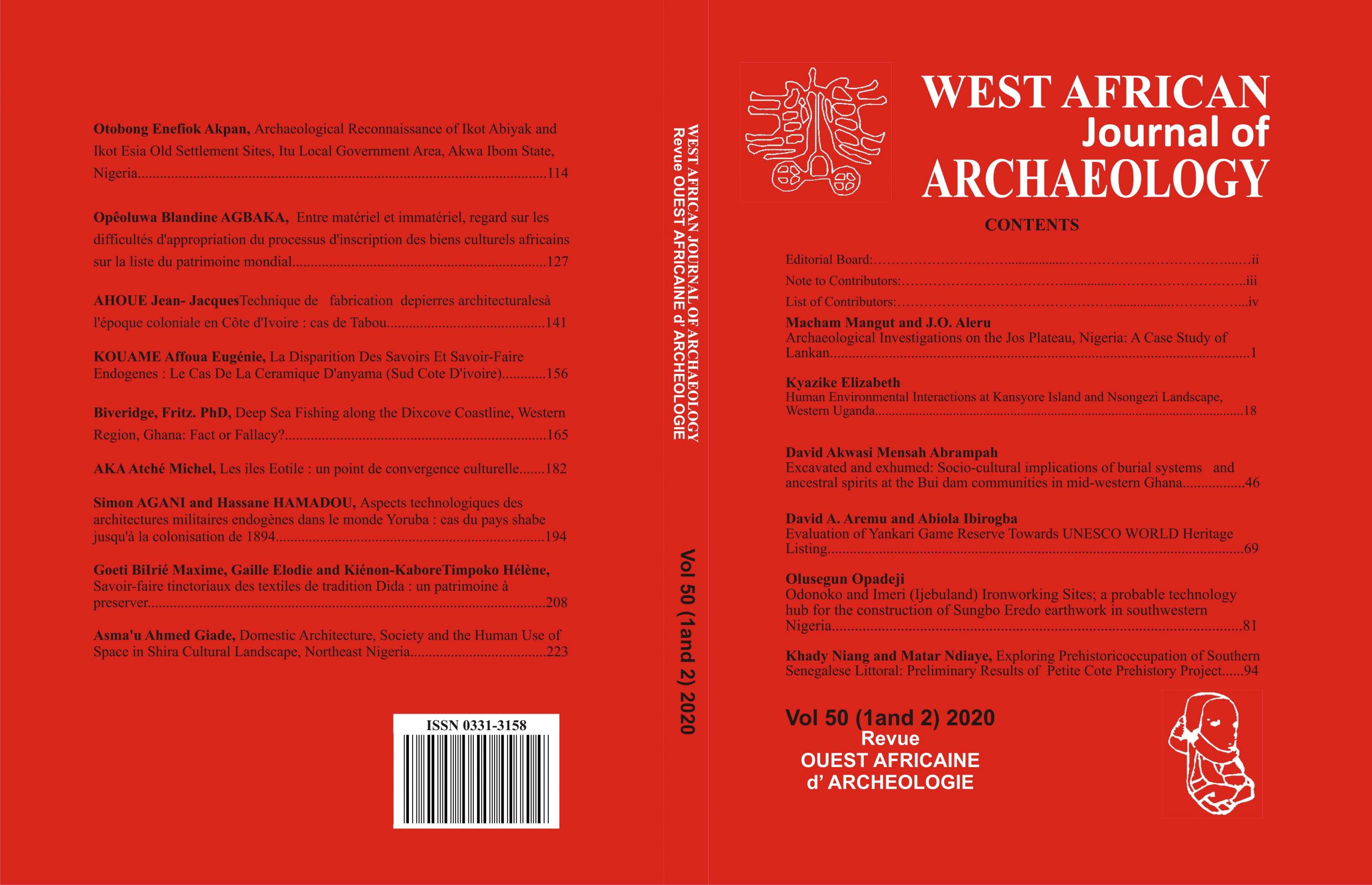
Excavated and exhumed: Socio-cultural implications of burial systems and ancestral spirits at the Bui dam communities in mid-western Ghana.
Excavated and exhumed: Socio-cultural implications of burial systems and
ancestral spirits at the Bui dam communities in mid-western Ghana.
David Akwasi Mensah Abrampah
Department of Archaeology and Heritage Studies
University of Ghana
Abstract
In 2009 the Department of Archaeology and Heritage Studies of the University of
Ghana was commissioned to begin the first of the three phases of salvage archaeology
in the Bui Dam catchment areas in mid-western Ghana. Bui Dam was intended to
produce 400MW of hydroelectric power to augment the existing capacity of the
country and improve the security of energy supply in Ghana. The dam project led to
relocation of five affected communities in the catchment areas of the Black Volta
River. One of the main concerns of the affected people was the relocation of their
spiritual entities, in the form of ancestral burials and community shrines, which are
also the foundations, or souls, of the communities. The people would not relocate
unless their deities and ancestral burials were also relocated to their new settlements.
This article examines the socio-cultural implications of two burial types (excavated
burials and exhumed burials) that were encountered during salvage archaeology
works in three affected communities (Bui, Akanyakrom, and Dokokyina) that were
relocated. These burial types have archaeological implications for the understanding
of death and afterlife among the impacted communities. The paper demonstrates how
deities, ancestors, and the dead in general are integral to the overall structure of the
living community.
Key words: Bui Dam, relocation, salvage archaeology, ancestors, shrines, burials